
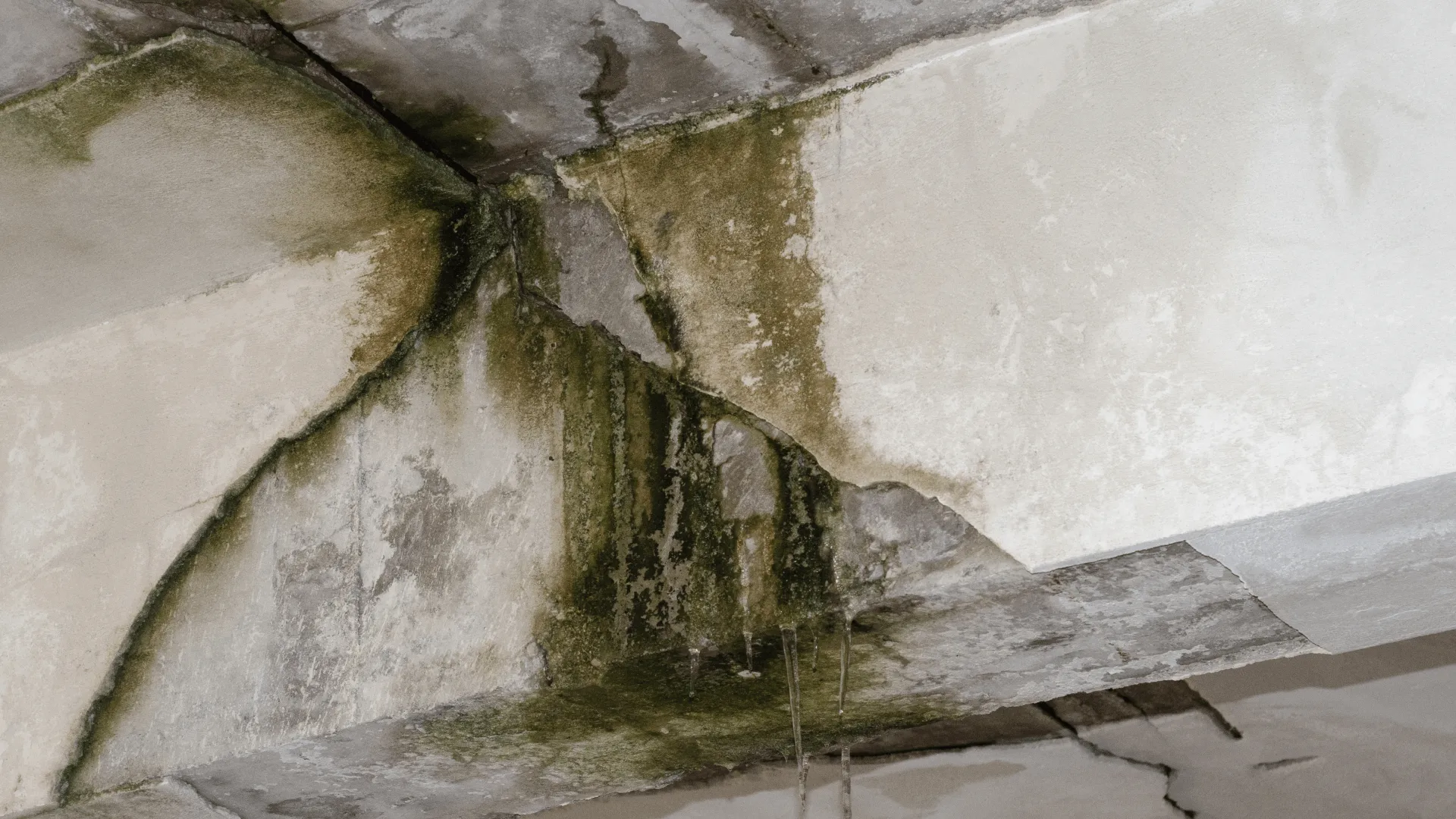
Water damage that’s not visible manifests almost without a sound. It slinks back there into your walls and has plenty of time on its week-to-month calendar before you realize things aren’t exactly right.
Drywall is more absorbent than most people realize
Although drywall may appear to be dry, and hard, it acts like a sponge. The gypsum powder inner part is highly permeable, and the paper wrapping on each side brings water inside the material through capillarity. This process of water migration inside the drywall can also happen in your ceiling, even if the water source looks small.
In other words, a tiny trickle can make a large stretch of drywall soaking wet long before the painted exterior looks any different. This is why the problem is much larger than the eye can see.
The slow culprits that most people overlook
Most water damage isn’t dramatic; it’s insidious. It emanates from sources that create a steady, low-level drip that no one – not even the homeowner – notices for months on end. It wets a much larger area than the actual source would suggest, and it surreptitiously travels along framing members until, eventually, someone discovers a musty odor or a patch of moldy drywall. By then, a repair that was probably relatively straightforward when the leak began has grown major.
Pinhole leaks in copper plumbing are a good example. Copper corrodes from the inside out under certain water chemistry conditions, and the resulting holes are small enough that you’d never hear water running. The pipe just weeps. Over time, the framing behind the drywall absorbs that moisture, and the drywall panel sitting against it starts to deteriorate from the back face forward.
Other common sources include failing window flashing where the seal between the window frame and the exterior wall breaks down, appliance water lines that develop slow drips at the connection point, and shower pan failures that let water migrate into the subfloor and travel along the base of adjacent walls. None of these look dramatic. All of them cause serious damage.
How to inspect with your senses first
Before you buy any equipment, walk through your home and use what you already have.
Inspect your walls and ceilings for peeling paint, bubbling, or any area where the paint seems to pull away from the surface. Look along baseboards where the drywall makes contact with the floor – water capillarying up from the subfloor will often present there first as a faint yellow or brown stain.
Feel along those same baseboards. Press firmly with your fingertips. Saturated drywall has a soft, slightly springy quality that dry drywall does not. If a section gives under pressure, that’s not a mere cosmetic problem.
Smell the room. Mold gives off compounds called mVOCs as it digests moist organic matter, and those compounds have a musty, earthy odor. If a room smells like an old basement even though it looks unproblematic, consider that smell a confirmed warning sign and start looking harder.
Also look for efflorescence on masonry surfaces near the floor or on exterior-facing walls. That white, powdery residue forms when water transports salts through masonry to the surface where the water evaporates. It is a definite indication that water is passing through the wall assembly.
Tools that let you check without tearing anything apart
You can purchase a non-invasive moisture meter ranging from $20 to $60 at any hardware store; you simply press the sensor plate against the wall surface, and without breaking through the paint or drywall face, it reads the moisture content of the material directly underneath it. Any reading above 17% in drywall typically warrants further investigation. Simply scan the wall methodically, move across it in a grid pattern so you can measure exactly where moisture begins and ends.
Thermal imaging cameras are a bigger investment, but they are increasingly available as smartphone attachments at much more modest pricing. They take an image and measure the temperature differences across the surface, so wet areas behind a wall show up as cool zones because water maintains temperature differently than dry framing or insulation. Professional building inspectors will use these to trace a leak directly back to its source without opening a single wall cavity.
The 24-to-48-hour window you can’t afford to ignore
This is the part that tells you how quickly you need to move. According to FEMA, mold can start to grow on moist surfaces within 24 to 48 hours of becoming wet. Drywall, since it contains a paper facing and an organic gypsum binder, is the sort of surface that mold will colonize before all others.
A seemingly minor moist area today will have a colony of active mold growing in it by this time tomorrow. And once mold gets a grip in a wall cavity, the costs of remediation rise significantly over and above what simple structural drying would have cost.
If you’ve used your nose or a moisture meter to confirm a hidden leak behind your wall, then hiring a certified pro in Water Damage Restoration Fort Worth TX is the next logical step to dry out your framing before mold has a chance to get a foothold.
What to do when you find it
To prevent further damage, turn off the water supply using the main valve if it’s a plumbing issue and you haven’t already located and stopped the source. Take pictures before doing anything – the readings of your relative humidity from a meter, the visible staining, the soft spots you discovered. This information will be useful when you make an insurance claim.
Do not only plug in a box fan near the wall and consider the problem solved. Residential fans only move air on the surface and cannot dry the interior of a wall cavity or the framing it covers. Professional structural drying equipment is designed to manage temperature, air circulation, and relative humidity in the entirety of the space, pulling moisture from materials instead of just the surface of the material.
The sooner a structural drying process starts, the smaller your repair bill will be – and the lower the health risk.