
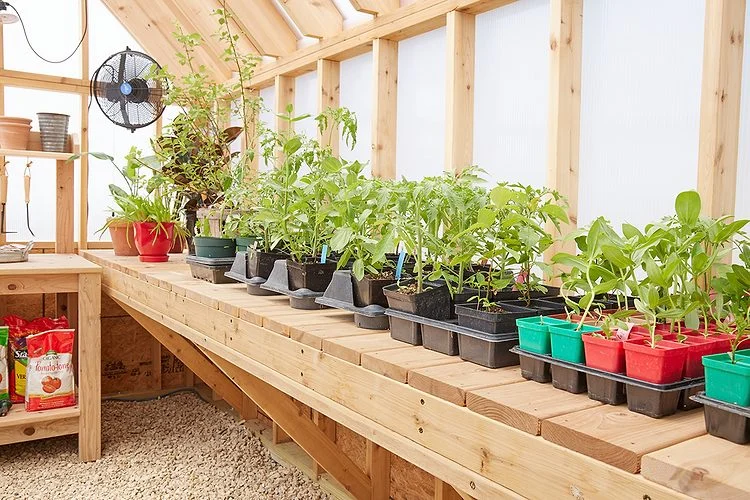
An indoor gardening station gives messy plant work a permanent home. Instead of carrying soil, trays, watering cans, labels, and tools between rooms, you can keep the entire routine concentrated in one manageable area.
The most useful indoor gardening stations combine water-resistant surfaces, accessible storage, suitable light, and enough workspace for seed starting, transplanting, and routine plant care.
Choose a Surface That Can Handle Soil and Water
Plant work is rarely tidy. Potting mix escapes containers, water drips from trays, and damp pots can leave marks on delicate furniture.
A washable tabletop, utility cart, or protected counter makes cleanup faster. Natural textures can still be incorporated through baskets or shelving, borrowing from residential design inspiration without placing vulnerable materials directly in the messiest working zone.
Keep the Working Height Comfortable
A low table may work for occasional tasks but becomes uncomfortable during repetitive potting. Counter-height surfaces often allow easier standing work.
If the station will be used while seated, leave open knee space rather than filling the entire lower area with bins.
Organize Seed-Starting Supplies Together
Seed trays, labels, markers, small pots, propagation plugs, and seed packets should share one section. Keeping them together prevents spring planting sessions from becoming a search through several closets.
Clear bins are useful when several supplies look similar. Closed baskets offer a softer appearance if the station sits within a living area influenced by decorative porch and garden ideas.
| Station Area | Useful Items | Storage Method |
|---|---|---|
| Upper shelf | Light supplies | Open shelf |
| Work surface | Trays and pots | Clear central zone |
| Drawer | Labels and tools | Divided organizer |
| Lower shelf | Soil and containers | Washable bins |
Make Watering Easy Without Creating Damage
A nearby sink is convenient but not mandatory. A compact watering can and removable waterproof tray can handle many small indoor collections.
Store absorbent cloths close to the station for spills. If water must be carried through the house regularly, choose a route with fewer obstacles and protect nearby flooring, much as broader property planning strategies account for repeated movement through functional areas.
Use Vertical Space for Light and Supplies
Seed starting can quickly consume an entire tabletop. Shelving lets several trays occupy the same footprint while leaving the main surface free for potting.
Adjustable shelves are especially helpful because plant heights change. Leave enough clearance for foliage and any grow lighting rather than fixing shelves only around empty trays.
Common Gardening Station Mistakes
Packing too much into the station is an easy mistake. Bags of soil, decorative pots, fertilizer, watering equipment, and tools can leave no actual place to work.
Poor spill planning causes another problem. Indoor gardening becomes stressful if every watering session threatens flooring or nearby furniture. A modest waterproof surface is often more useful than an elaborate cabinet system.
Frequently Asked Questions
Where is the best place for an indoor gardening station?
A bright utility area, kitchen corner, enclosed porch, laundry space, or spare-room wall can work, provided moisture and soil can be handled safely.
Should seed trays sit directly on furniture?
Using waterproof trays underneath seed containers is safer because watering can create unnoticed drips or condensation.
How can seed packets be organized?
Small labeled boxes, photo cases, or divided containers make packets easier to sort by plant type, season, or expected planting date.
Give Plant Care a Permanent Home
A gardening station earns its space by reducing repeated setup. Soil stays near pots, labels remain beside seeds, and watering supplies are available where plants are actually handled.
Start with a washable surface and basic storage before adding more equipment. Once the everyday workflow feels easy, shelves, lighting, and propagation areas can grow around it naturally.