
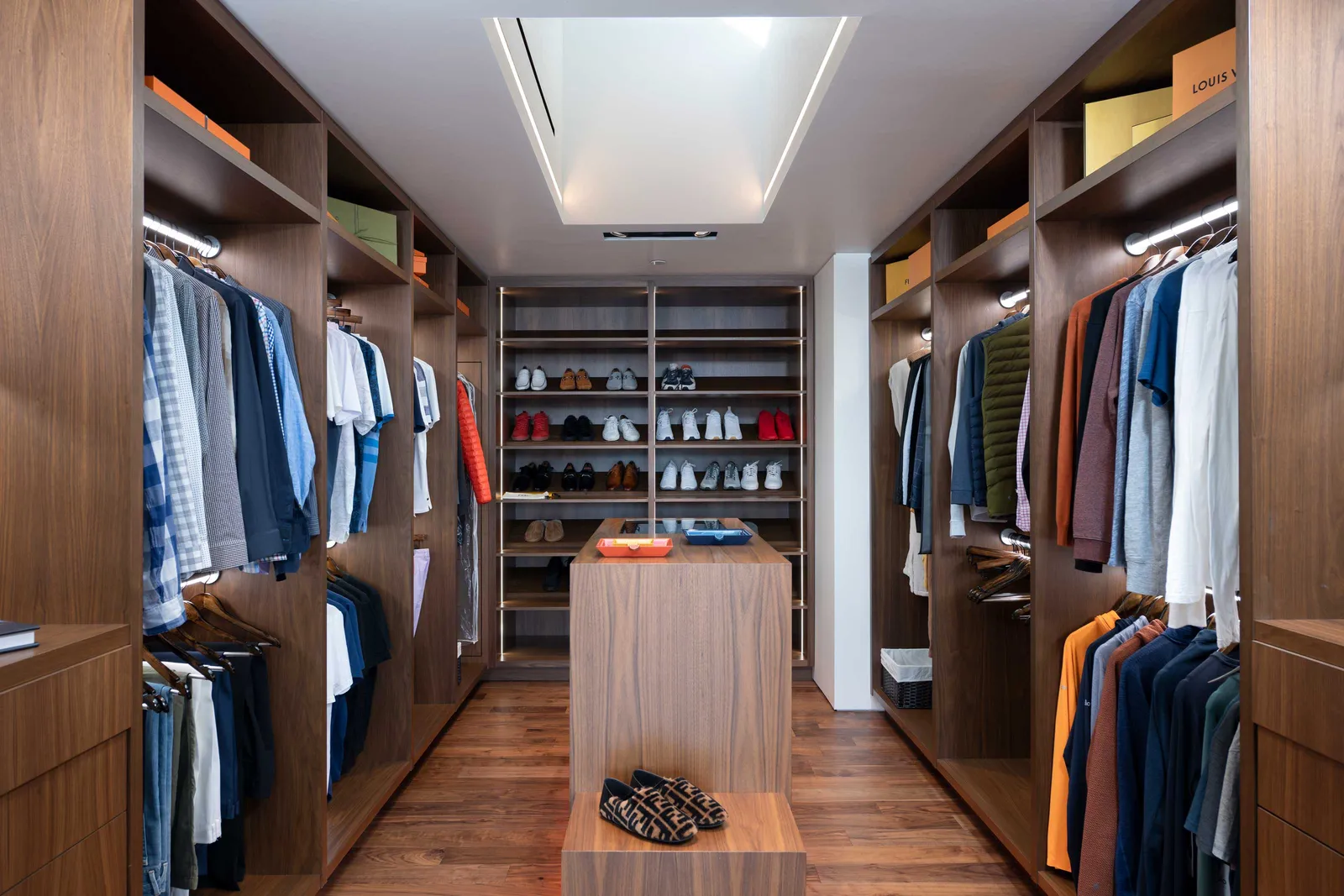
A closet becomes frustrating when everyday clothing requires stretching overhead, bending deeply, or moving several items to reach one thing. Accessible closet ideas place frequently used storage within comfortable reach while keeping the system flexible enough for changing routines, different users, and future mobility needs.
Build Storage Around Reach Frequency
Not every shelf needs to be equally convenient. Daily clothing deserves the easiest positions, while luggage, seasonal bedding, and rarely used items can occupy harder-to-reach zones.
This simple priority system prevents prime storage space from being wasted on objects that are touched only a few times each year. It also reduces unnecessary reaching and crouching during normal mornings.
Lower Everyday Hanging Storage
Traditional closets often place one hanging rod high enough to leave large unused space underneath. Lowering frequently used hanging storage can make shirts, jackets, skirts, and trousers easier to see and handle.
People exploring property organization ideas may encounter many approaches to using household space efficiently. Inside a closet, efficiency means putting the most frequently handled items where the user can reach them with minimal effort.
Consider More Than One Rod Level
A split hanging arrangement can provide a lower section for shorter garments and another zone for longer clothing. Adjustable systems are useful because the height can change as household needs shift.
Pull-down accessories can also bring higher storage closer, though they add moving parts and may not suit every user.
Keep Drawers and Shelves Comfortable
Deep floor-level drawers may be difficult for someone who has limited balance, knee movement, or bending ability. Frequently used drawers are often more convenient when positioned between low and mid-level heights.
Broader residential layout resources may help with whole-room planning, but closet usability often depends on smaller details such as shelf depth. Extremely deep shelves can hide clothing behind other items and encourage clutter.
| Storage Area | Good Use | Potential Problem |
|---|---|---|
| Mid-level shelves | Daily folded clothing | Can become overcrowded |
| Lower drawers | Light occasional items | Requires more bending |
| Upper shelves | Seasonal storage | Harder to reach safely |
| Open hanging area | Frequent garments | Needs enough approach room |
Shallow shelves often keep folded items more visible. Drawer pulls should also be easy to grasp without requiring a tight pinch.
Leave Clear Space in Front of Storage
A well-arranged closet can still be difficult to use if the approach is blocked. Hampers, shoe racks, boxes, or open doors can remove the space needed to stand comfortably or position a mobility aid.
Homeowners gathering broader design planning references can apply the same idea used in larger layouts: access routes matter as much as the destination. A closet should allow someone to approach the storage they use most without stepping around obstacles.
Lighting deserves attention too. Clear visibility reduces searching and makes labels, clothing colors, and stored accessories easier to identify.
Mistakes That Make Closets Harder to Use
Trying to maximize every vertical inch can actually reduce everyday convenience. A closet packed from floor to ceiling may offer more theoretical capacity while forcing frequent reaching, bending, stacking, and reshuffling.
Fixed shelves are another limitation. They work for the original storage plan but can become inefficient if clothing habits or physical abilities change.
Avoid putting the heaviest containers at the highest levels. Even people with full mobility can struggle to control bulky boxes overhead. Less convenient zones are better reserved for lightweight items that are used infrequently.
Frequently Asked Questions
How can I improve an existing closet without rebuilding it?
Start by moving daily items to easier heights. Add adjustable shelving, relocate hanging rods where practical, improve lighting, and remove unnecessary floor storage that blocks the approach.
Are open shelves better than deep drawers?
Neither is automatically better. Open shelving offers quick visibility, while drawers contain smaller items neatly. Comfortable height, manageable depth, and easy hardware matter more than the storage type alone.
What should go on high closet shelves?
Reserve upper areas for lightweight, infrequently used items such as seasonal clothing or spare linens. Avoid storing heavy objects overhead if lifting them down would be difficult or unstable.
Put Daily Clothing in the Easiest Zone
Accessible closet storage works best when convenience follows frequency. Keep everyday garments, shoes, and accessories within comfortable reach, preserve clear floor space, and use adjustable components where possible. The result doesn’t need to look specialized; it simply needs to reduce unnecessary effort and remain easy to change later.