
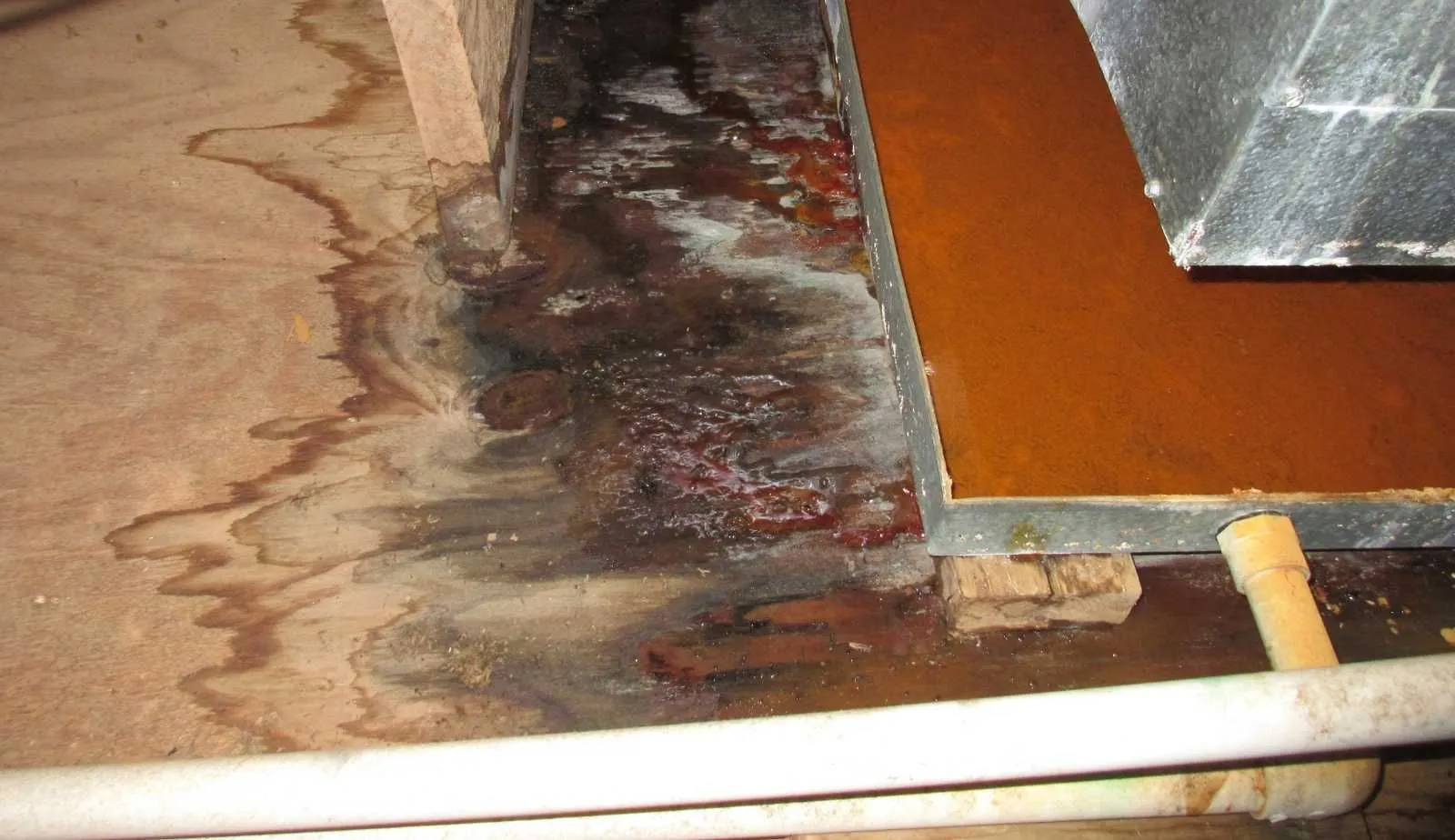
A small leak is usually the most obvious sign that a bigger problem is on the way. It could be coming from a loose fitting or something as simple as a missing tile from your shower. Either way, left unattended the water will continue to seep into your walls, ceilings, and floors. This is usually the point when mold and mildew raise their ugly heads and that’s a can of worms you want to keep shut if you can.
The 24-to-48-hour mold window
Mold can grow within a day or two of leaks or floods, especially if the affected area is not dried quickly and properly. Most fungi need nearly constant moisture to thrive. Fixing leaks and seepage, and drying wet or damp walls and carpets within 24 hours, is critical. Use dehumidifiers and air conditioners to keep the humidity level in your home no higher than 60 percent and clean regularly with detergent and water to remove excess mold growth. Vacuuming with a HEPA-filtered vacuum cleaner after things are dry can remove even more mold. Put organic garbage in airtight bins.
How clean water turns dangerous
Not all water damage is initially dangerous, but if given enough time, it will become so. Water from a burst supply line is Category 1, or clean water. After 24 to 48 hours, it’s absorbed floor contaminants, dust, organic debris, and microbial matter, and becomes Category 3, or black water – the same as sewage backflow.
This doesn’t happen in a vacuum. After waiting that 24 to 48 hours, a restoration estimate and scope that might have been $3,000 to $5,000 based on the initial Category 1 assessment is practically guaranteed to turn into a $25,000 to $50,000 rebuild.
Category 3 water damage presents a tear-out and removal line item that can’t be negotiated. All the drywall must go. All the carpet and carpet pad. All the furniture that sat in water. All your kid’s crayon masterpieces your refrigerator clipped and the magnet hung. All your books, magazines, and papers. If they got wet, they’re in the garbage.
Hidden structural degradation
Small leaks are more damaging than big ones because they don’t cause the panic of a flood. Little fractures in pipes, wear and tear in hoses, loose grill caulking, tiny grout cracks – these are the sorts of trickle leaks that seep water inside walls before sending up a red flag. You won’t see them flowing across the floor, so they have countless hours to work their destructive magic inside walls and under flooring.
Once your feet are wet or you see water stains on the wall, you have a destroyed bathroom floor and structural damage to correct. Subflooring swells and delaminates and loses its ability to carry weight. Wall framing decays from mold, which doesn’t die off once water is stopped – it will lurk, waiting for the next leak to renew colonization. What would have cost $100 in sealing compounds and grout becomes $5,000 in replacement panels and floor joists.
If you live in a desert climate like Tucson, you have cooling season instead of winter-driving ice wedges through your loosened roof tiles. Tiny rivulets of condensed water escape from your rooftop exhausts, dribbling merrily through ceiling cavities and sopping insulation and rafters – which is why securing prompt water damage restoration Tucson AZ matters before that hidden moisture turns into a full-blown structural problem.
Insurance doesn’t cover neglect
The insurance claims that don’t pass the test are the slow leak claims – and they are increasing in frequency every year. Ten years ago, roughly 2 percent of homeowner’s insurance claims were for damage caused by leaking water or a sudden water discharge. Today, these claims account for more than 20 percent of the total.
If you file a water damage claim, the burden of proof for maintenance is on you. Insurance companies will pay for the clean up when it’s a sudden leak with a known event. But you’re expected to pay for the clean up if it’s a leak that you should have known about.
For homeowners who assume they are covered against long-term water damage because they’ve purchased an insurance policy and paid their premiums, that denial can be crushing. Insurance money that’s expected to pay to recover from a disaster is now needed to remove and replace the damaged materials.
Electrical and foundation risks
Water can move around. It travels through wall cavities, flows over framing, and can move far from its point of entry. Once water gets to electrical components such as outlet boxes, junction boxes, and wiring connections, it causes corrosion that occurs slowly but inexorably. Corroded wiring connections can become a fire hazard months after the original leak has receded from memory.
Near the foundation, even minor external ponding or seepage creates hydrostatic pressure against concrete walls, washing away the soil that cradles the slab. Slab leaks, pinhole breaks in the copper piping that runs beneath a concrete foundation, can be so devastating because the water loss can go on unseen as soil washout and concrete damage escalate.
Acting fast is the cheaper option
This is a predictable pattern: if action is taken early on, the expenses will be lower. Water intrusion that is addressed immediately can be managed through drying. The same intrusion, if left untreated for a week, will require remediation and rebuilding, and perhaps even an assessment of the foundation. The professionals adhering to IICRC S500 standards apply psychrometrics to control temperature, airflow, and vapor pressure in order to dry out structural materials as quickly as possible and prevent further damage.
However, this scientific approach only works if there is still something to save and dry. If you wait too long, all efforts to dry the structure will be in vain, and you will have to replace it.