
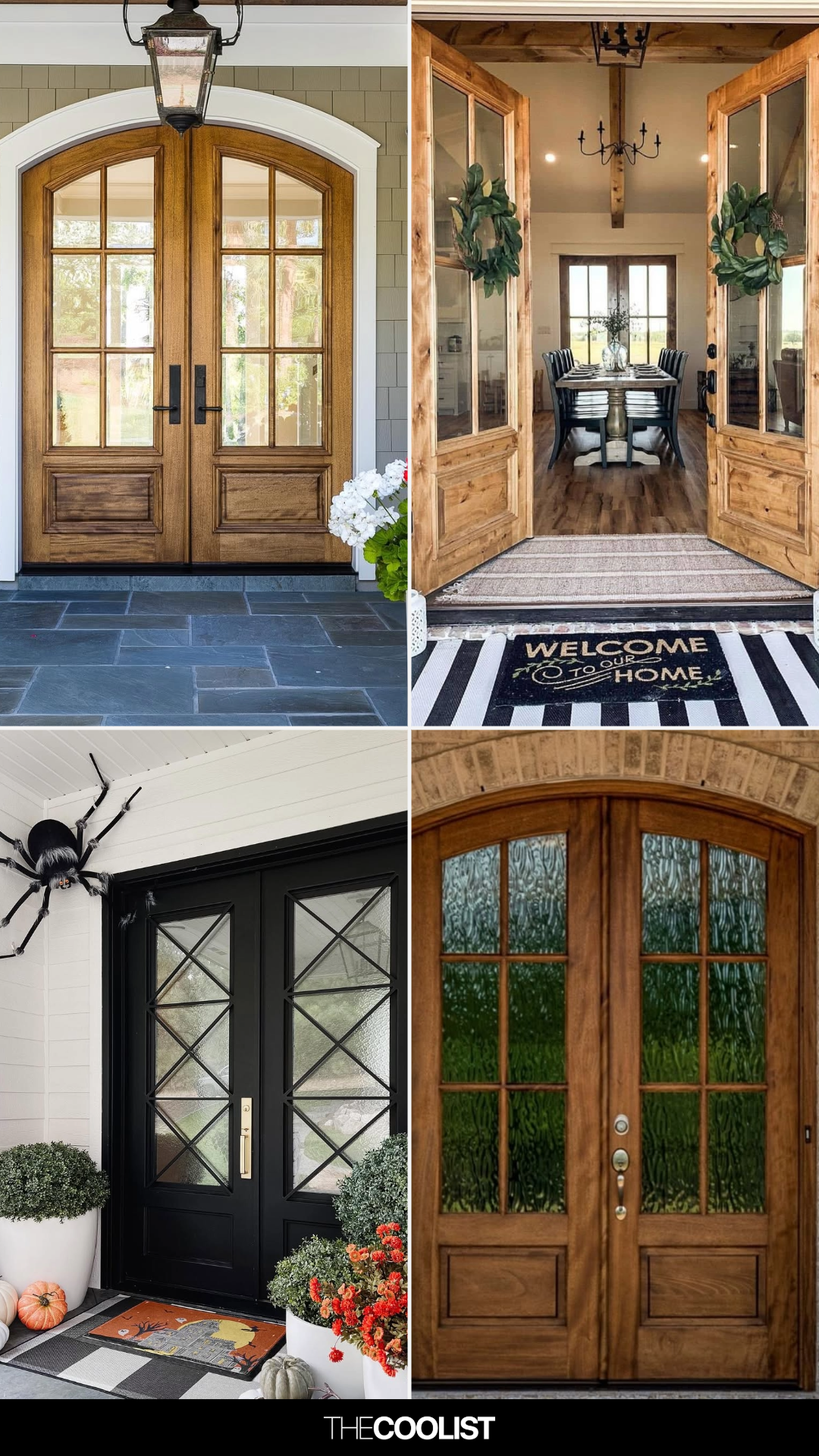
Double doors can turn an ordinary opening into a clear architectural moment. Their wider proportions work especially well between dining rooms, studies, living spaces, primary bedrooms, and other rooms where the transition deserves more presence. Strong double door ideas depend on scale, symmetry, hardware, and surrounding wall space rather than simply installing two matching slabs.
Start With the Width of the Opening
Double doors need enough wall and floor area to feel intentional. In a narrow opening, two small leaves may look cramped and create more hardware than the space needs.
Larger openings benefit most because both doors can frame the view into the next room. Keeping one leaf closed during everyday use also allows the opening to function much like a standard single door.
Use Proportion to Create Presence
Tall doors often make a stronger impression than overly ornate ones. Simple panels with generous height can give a room architectural weight without adding visual clutter.
Studying interior architecture features can help when coordinating door proportions with ceiling height, wall molding, windows, and other repeating elements.
Coordinate the Doors With a Focal Wall
A pair of doors is already a strong visual feature, so nearby elements should work with it rather than compete against it. Matching paint can create a quiet look, while natural wood provides more contrast.
If the opening sits near a mantel or hearth, fireplace styling ideas can provide useful visual references for balancing symmetry, trim thickness, and material changes across the room.
| Door Treatment | Visual Effect | Works Well In |
|---|---|---|
| Full painted panels | Formal and balanced | Dining rooms |
| Natural wood | Warm and substantial | Studies |
| Glass panes | Light and open | Living areas |
| Minimal flush doors | Clean and restrained | Modern homes |
Decide How Both Leaves Will Operate
Some double doors are opened together frequently, while others use one active leaf and one mostly stationary leaf. That difference should influence the hardware.
An inactive leaf can use discreet bolts at the top and bottom. The active side then operates like a normal door while retaining the option to open the full width for furniture movement, gatherings, or special occasions.
Exterior double doors require additional attention to weather sealing and security. Looking through exterior doorway concepts can make the distinction between indoor decorative priorities and outdoor performance requirements clearer.
Use Glass Carefully
Glass can keep adjoining rooms connected even when the doors are closed. Clear panes work well between social rooms, while reeded, textured, or frosted glass provides more visual separation.
The amount of glazing should match the purpose of the room. A study may benefit from borrowed light but still need partial privacy during calls or focused work.
Common Design Choices That Miss the Mark
Oversized hardware can make double doors look busier than intended, especially on narrow panels. Another mistake is forcing perfect symmetry when the surrounding architecture isn’t symmetrical to begin with.
Swing clearance also deserves attention. Two open leaves can occupy significant floor area, so nearby chairs, consoles, and circulation paths should be tested before finalizing the arrangement.
Frequently Asked Questions
Do both double doors need handles?
Not always. One leaf can act as the primary door while the second remains secured with flush bolts. Hardware placement depends on how frequently both sides need to open.
Are double doors suitable for small rooms?
They can work when the opening is wide enough, but the combined swing area may consume valuable floor space. Sliding or pocket alternatives can be more efficient in compact rooms.
Should interior double doors swing into or out of a room?
The best direction depends on furniture, circulation, and adjoining spaces. The doors should open without blocking important pathways, switches, cabinetry, or other doors.
Let Proportion Do the Heavy Lifting
Double doors don’t need excessive decoration to feel special. A generous opening, balanced dimensions, well-chosen hardware, and a clear view into the next room create most of the drama. Plan how the doors operate before focusing on finishes, and the result can feel architectural rather than ornamental.