
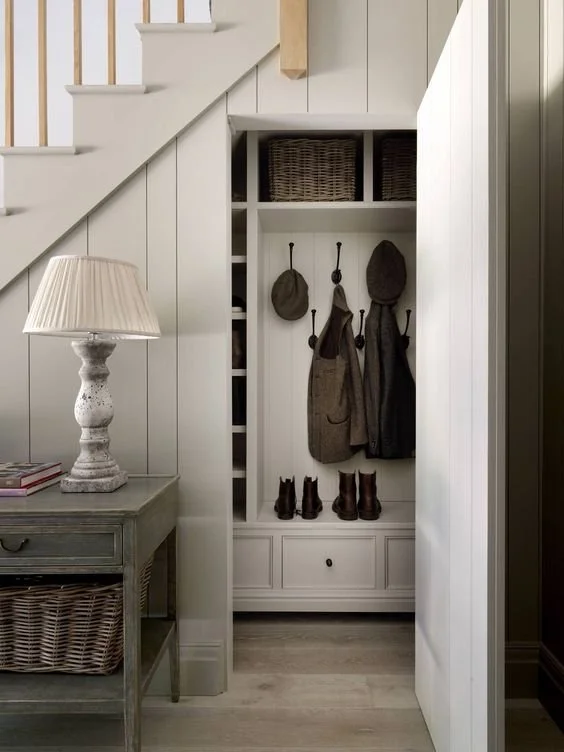
Hallway cabinet ideas need to solve two competing problems: creating useful storage and preserving comfortable movement. Because hallways are passage spaces first, the strongest designs stay relatively shallow, keep handles out of the traffic path, and concentrate storage where the corridor naturally widens.
Start With Walking Space, Not Cabinet Capacity
It is tempting to measure an empty wall and fill as much of it as possible. That can make a hallway feel narrower even when the cabinet technically fits.
Begin by protecting the clear walking path. Anyone studying home interior references should treat storage depth as a secondary decision after door swings, stair access, entry routes, and everyday movement have been considered.
Look for Natural Widening Points
Small recesses, areas beside doorways, and wider sections near landings can accept cabinetry more comfortably than the tightest section of a corridor.
Choose Shallow Cabinets for Everyday Items
A hallway cabinet does not need wardrobe depth to be useful. Narrow shelving can hold shoes, bags, keys, paperwork, cleaning supplies, board games, or folded household linens.
Sliding doors, touch-latch fronts, and recessed pulls keep hardware from catching clothing as people pass. Exploring space-conscious design ideas may also help when deciding whether a cabinet should visually disappear into the wall or become a deliberate architectural feature.
| Storage Need | Cabinet Approach | Possible Limitation |
|---|---|---|
| Shoes | Low shallow cabinet | Limited tall-boot space |
| Keys and mail | Slim wall unit | Needs regular decluttering |
| Linens | Tall shelving | Deep piles become untidy |
| Cleaning supplies | Closed cupboard | Requires safe product storage |
Take Storage Upward Instead of Outward
Tall cabinetry can create considerable capacity without occupying additional floor depth. Upper shelves are ideal for seasonal items, luggage accessories, spare bedding, or things used only occasionally.
A floor-to-ceiling cabinet can also reduce awkward dust-catching gaps. Broader residential planning resources can inspire ways to continue nearby wall colors or trim lines across the cabinet front so the storage feels integrated.
Use Low Cabinets Where Walls Need Breathing Room
Not every hallway benefits from full-height storage. A low cabinet can hold shoes or household supplies while leaving the upper wall available for artwork, mirrors, lighting, or simply visual openness.
The top surface becomes useful too, although it can easily turn into a dumping ground. A shallow tray for keys or a single decorative object often works better than filling the entire surface.
Mistakes That Make Hallway Storage Feel Cramped
Oversized handles are an easy mistake. Even a shallow cabinet can become annoying when knobs and pulls project into a narrow walking route.
Another problem is storing items that require wide doors to access. Large hinged fronts can temporarily block the corridor every time they’re opened. Avoid forcing too many functions into one wall; a smaller cabinet that opens easily often provides better day-to-day storage than a deeper unit everyone has to squeeze around.
Frequently Asked Questions
Are sliding doors good for hallway cabinets?
Yes. Sliding doors avoid swinging into the passage and can work especially well on longer cabinets. The tradeoff is that only part of the cabinet interior is accessible at one time.
What can be stored in a shallow hallway cabinet?
Shoes, folded linens, mail, small bags, cleaning accessories, games, and everyday household supplies can fit well. Adjustable shelves make the cabinet easier to change as needs evolve.
Should hallway cabinets match the wall color?
Matching the wall can make large storage units feel quieter and less imposing. A contrasting finish works when you want the cabinet to read as furniture rather than built-in architecture.
Protect the Passage First
Good hallway storage should make the home function better without turning a circulation route into an obstacle course. Preserve comfortable movement, then use shallow depth, vertical space, low-profile hardware, and carefully chosen door styles to create capacity. If the cabinet feels easy to walk past even while someone else is using it, the design is probably working.